01 · ASIAN FOOD CULTURE
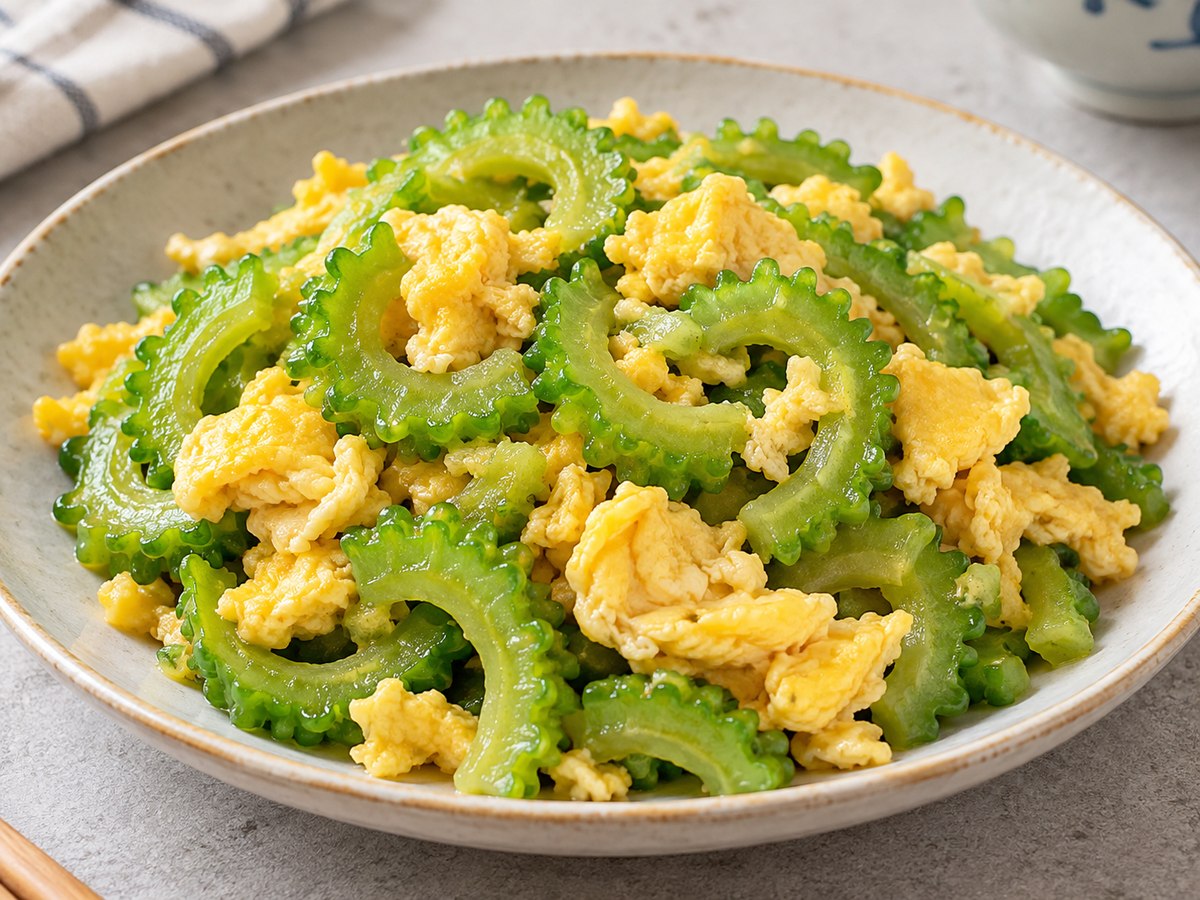
China, Taiwan & Hong Kong
Stir-fried with eggs, served in soup or simmered with meat; the bitter flavour is often balanced with familiar home-cooked ingredients.
From home cooking to modern wellness products, bitter melon is getting fresh attention again.
Explore the story ↓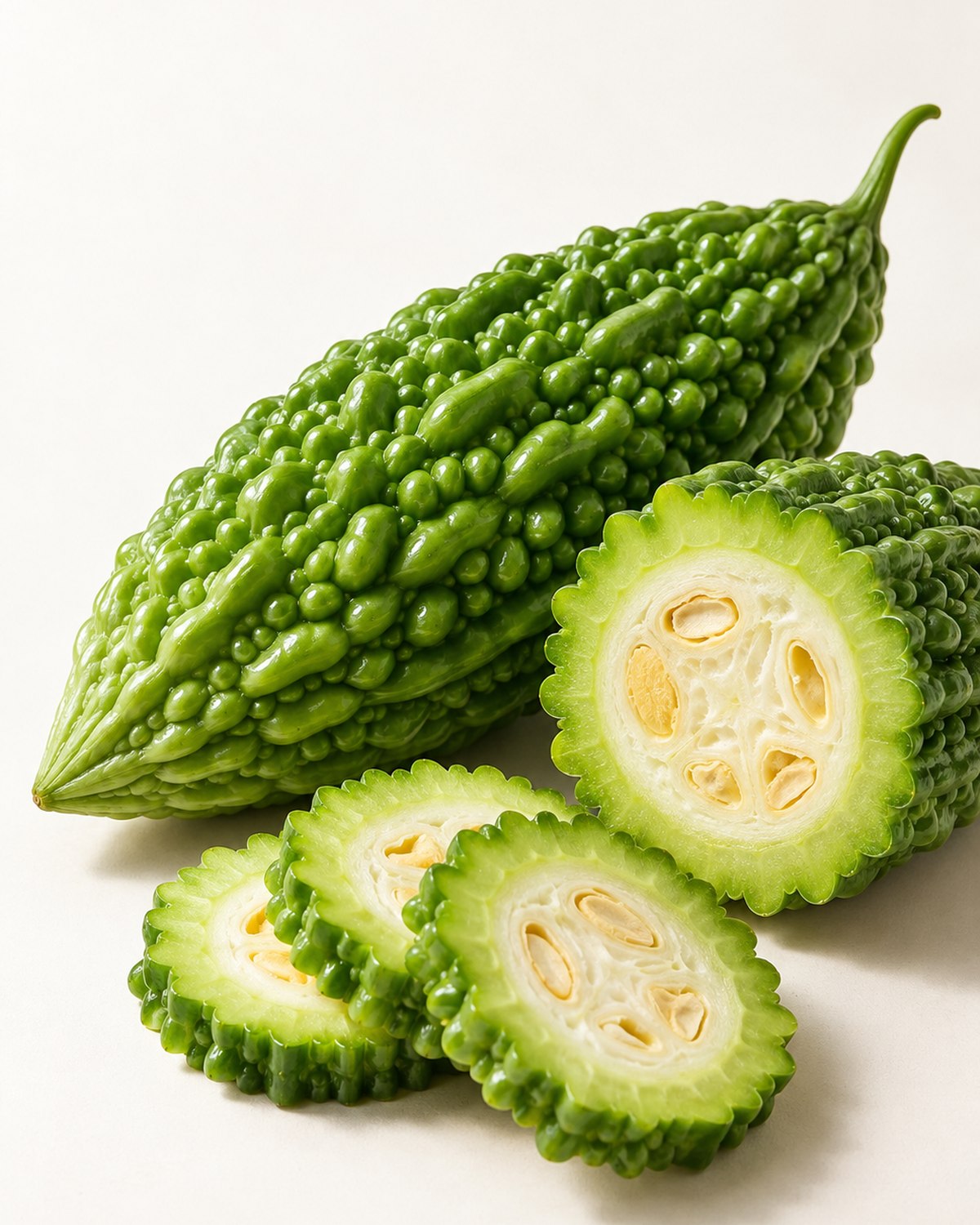
Bitter melon is a traditional food, not a recently invented superfood. This guide explores the dishes, nutrients, scientific findings and limitations behind the conversation.
An English-language documentary about bitter melon and its place in food culture.
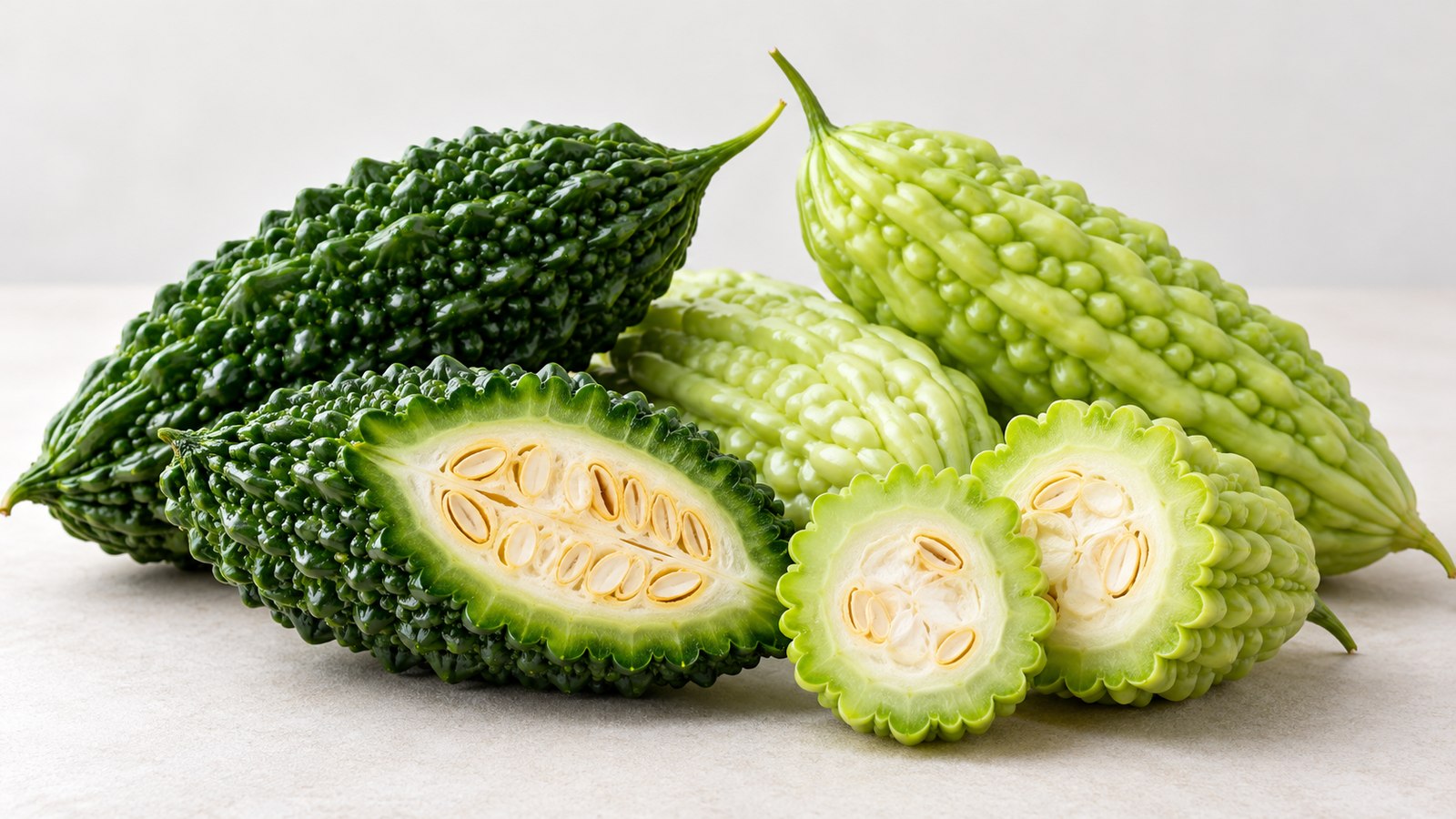
Bitter melon (Momordica charantia) is the fruit of a climbing plant in the gourd family, commonly prepared as a vegetable. Its ridged green skin and pronounced bitterness make it instantly recognizable.
Its flavour is embraced in very different regional dishes.
Stir-fried with eggs, served in soup or simmered with meat; the bitter flavour is often balanced with familiar home-cooked ingredients.

Goya champuru combines bitter melon, tofu, eggs and often pork or luncheon meat.
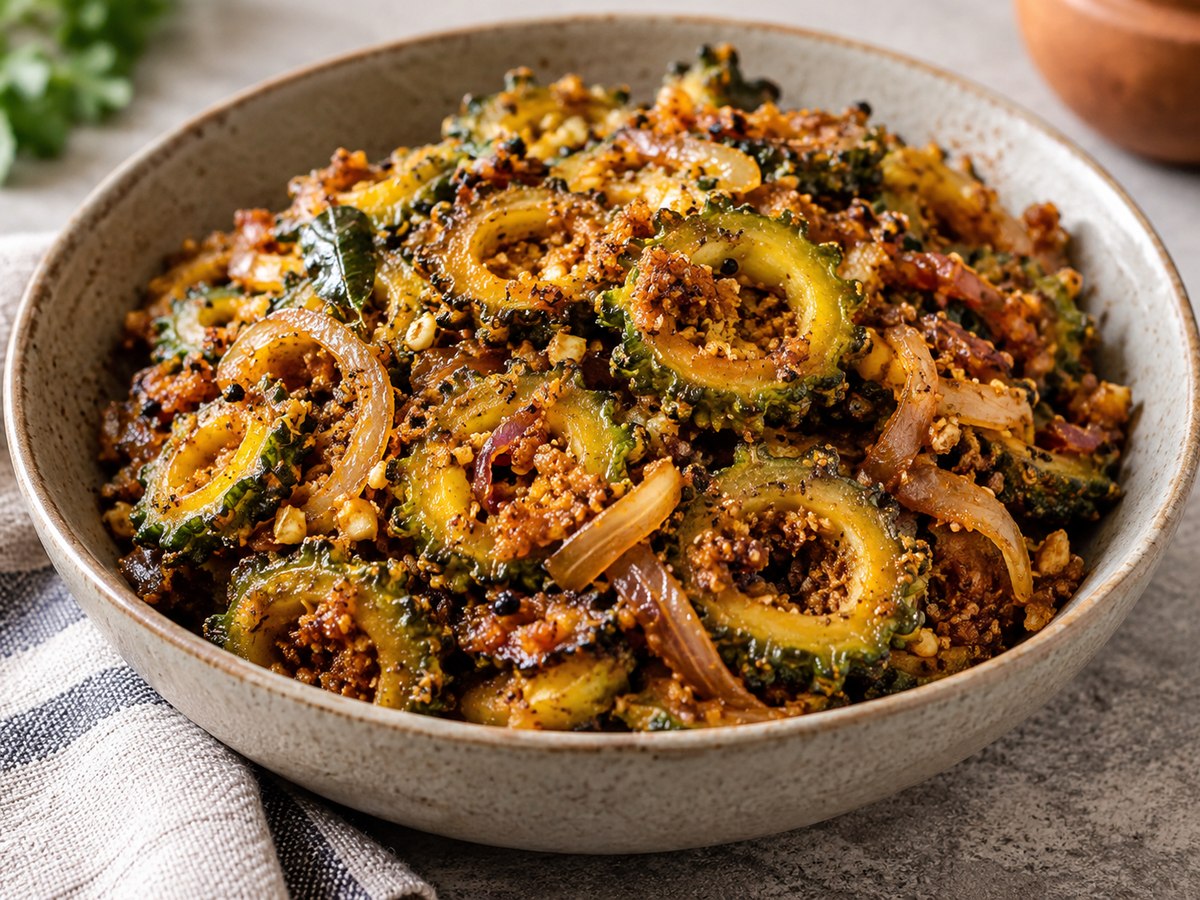
Known as karela, it is prepared with aromatic spices, onions and other vegetables.
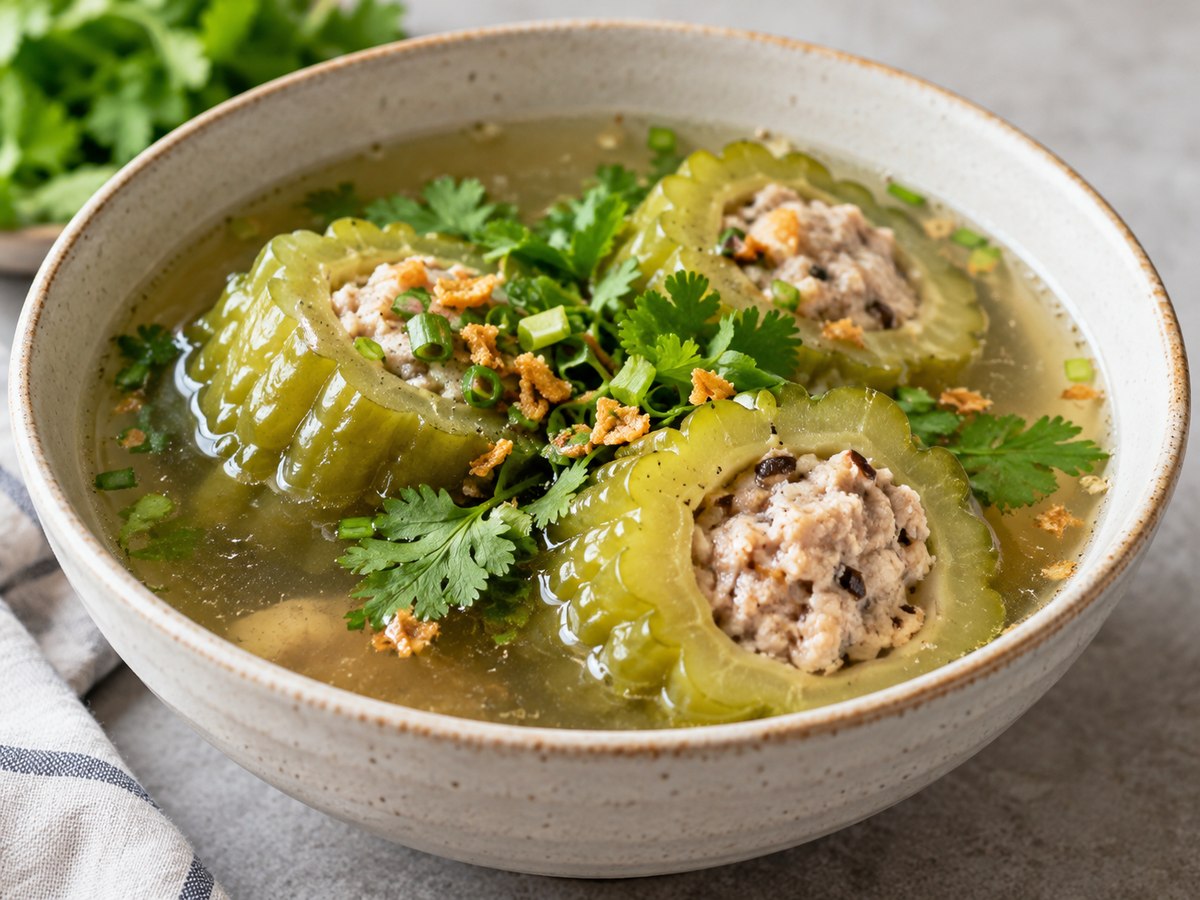
Stuffed bitter melon soups and stir-fries are popular in several regional cuisines.
Bitter melon is not new to Asia. What is relatively new is its appearance in powders, extracts, capsules and products described as bitter melon peptides.
An everyday ingredient in family recipes.
Extracts and supplements differ considerably in composition.
Researchers examine individual plant compounds and metabolic pathways.
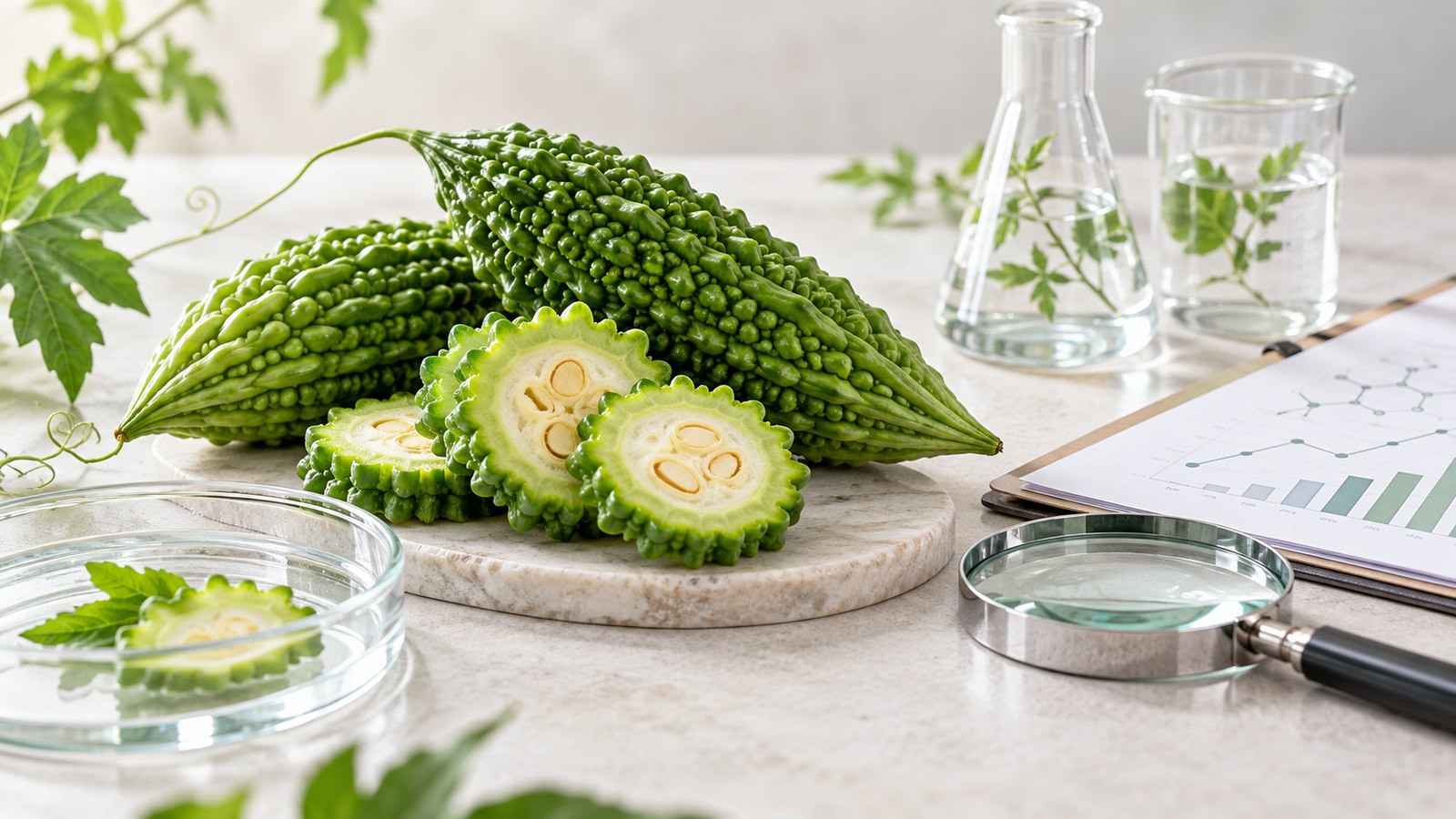
Its established value begins as a vegetable; clinical claims require a higher standard of evidence.
Contributes fibre as one part of a varied diet.
Contains vitamin C; amounts vary with preparation and cooking.
A vegetable option; the nutritional profile of the final dish depends on the recipe.
Contains compounds such as saponins and phenolics being examined in research.
Can be enjoyed in soups, stir-fries and other everyday dishes.
Laboratory and animal studies have explored glucose uptake, insulin-related pathways and fat metabolism. That explains scientific interest, but does not establish a treatment in humans.
Charantin and other bitter melon components have been studied in cells and animals. The doses and extracts used cannot be equated with eating a normal serving.
A 2025 meta-analysis of 25 randomised trials reported improvements in some glucose-related measures among participants with prediabetes or type 2 diabetes. Study differences limit certainty.
A 2024 analysis of 8 trials (423 participants) reported average changes of −9.71 mg/dL in total cholesterol and −10.24 mg/dL in triglycerides; overall LDL and HDL results were not significant.
Another 2024 analysis of 9 trials (414 participants) found no clear benefit versus placebo for several glucose and lipid outcomes. The evidence is mixed.
Large amounts or concentrated products may cause stomach discomfort, nausea or diarrhoea.
Do not add bitter melon supplements without medical advice; blood glucose may be affected.
Avoid self-prescribing concentrated bitter melon products during pregnancy because safety data are limited.
No. A whole-food dish and a processed, concentrated product differ in composition and dose.
Peptides are short chains of amino acids. Products marketed under this name may use different ingredients and manufacturing methods. Their effects cannot be assumed from studies of whole bitter melon or unrelated extracts.
Food eaten as part of a meal.
Processed formulations requiring their own evidence on identity, dose, safety and effectiveness.
Explore the tradition. Understand the evidence. Be cautious with promises of medical benefits.
Back to top ↑These references are provided as plain text only. No outside links or product recommendations.